Introduction
You are what you measure: an age-old adage for any entrepreneur. This ranges from measuring key performance indicators to measuring how much money you have in your bank account. It is imperative, however, that you do not forget to measure time as well.
For a business owner, tracking time correctly for employees is a vital part of the business. Your employees are not only the lifeblood of your company, but they are also oftentimes the largest cost the business incurs each year. Failing to accurately track their time could lead to unnecessary costs or insufficiently compensated employees.
Why Track Time?
As mentioned briefly above, your employees are likely one of the largest costs of doing business. Therefore, tracking their clock in and clock out is important to make sure that you aren’t over/under paying your employees. A few of the methods that businesses use to track time are:
Honor System
The oldest and simplest method available. The extent of this method is showing up to work and hoping that the supervisor will put down accurate hours for the employees. The honor system costs nothing to maintain but can lead to inaccuracies without a paper trail.
Pen and Paper
A step further than the honor system, the pen and paper system is a simplistic way of tracking time that is cheap but can be inaccurate if employees forget to input hours or there are miscalculations for weekly totals when it’s all added up. This method also doesn’t leave a strong paper trail if the timesheet is misplaced or you have a shady supervisor writing down less hours than an employee actually worked.
Software Systems
There are more time tracking systems than could possibly be mentioned in this article. Software systems allow your employees to clock in/out directly from their computers or their phones. An added benefit to software systems is the ability to easily track what work the employees are doing if you are in a business where your employees work on multiple projects. While there are fees associated with software systems, the ability to track hours and even pay payroll taxes through the system online makes them a valuable time saver. Software systems also provide a more accurate (electronic) paper trail.
Keycard/Biometrics
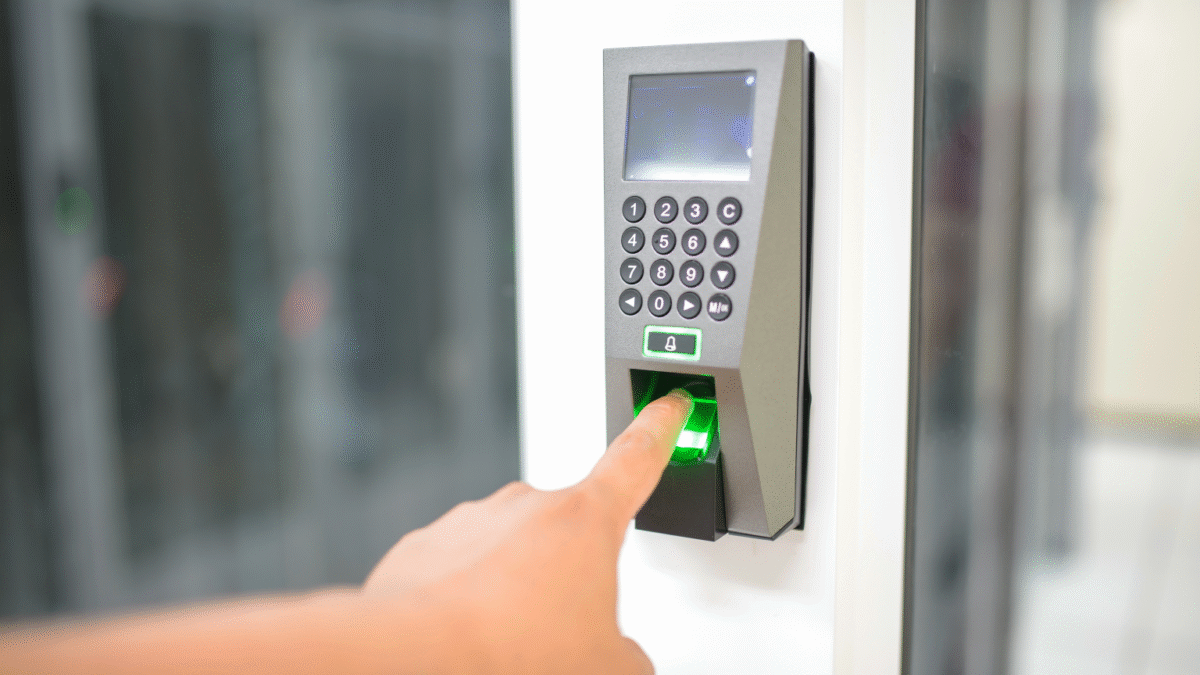
These are more elaborate time tracking systems that piggyback off of software systems. The first is using a keycard linked to each employee. Using a keycard allows businesses to track in/out times with a more definitive link to each specific employee. The next system, biometrics, takes a keycard to the next level. This is a more invasive system for the employee and oftentimes uses fingerprints. Biometrics are typically utilized by large companies that need to make sure that only true employees are gaining access to their facilities. These types of systems come with higher initial and maintenance fees.
Benefits of Time Tracking
Being able to track your employees’ time worked helps your business run more efficiently, as it allows you to see how many hours your employees are putting into your business. Tracking time is especially important if you have multiple projects going on at the same time and you are trying to allocate costs. Being able to get project margins would help you make the decision of whether to continue offering a service or if you are losing money from it.
In a similar vein, if you have multiple business units with cross functional employees, seeing how much time is being spent by specific employees allows you to see who is working the most efficiently within specific units. Another possibility is moving higher earners out of units or projects to reduce the overall unit costs and allow them to work on higher margin projects.
Another added benefit of tracking time is the ability to give customers accurate time estimates for how long a particular job will take. For example, if you run an auto shop, it would allow you to see the average time it takes to do repair work. By seeing that average, you can then relay that information to the customer. Tracking the time also allows you to see outliers in your data. Perhaps you have one mechanic that is lagging behind the others in how long it takes them to accomplish the tasks they are given. You are then able to address the underlying issue that is causing their work to slow. Inversely, if you have a worker that is doing their work more efficiently than originally anticipated, you can observe their work and create new standard practices to better your overall business performance.

Conclusion
At the end of the day, you have spent all the time given to you whether you utilized it wisely or not. Having the ability to track your time accurately and efficiently will allow your business and all of its components to function like clockwork. By accurately measuring your time, you are then able to make incremental improvements to how your business is run and allocate your resources in the most practical way. If you have any questions on how to better track your time, reach out to Volpe Consulting & Accounting!
If there’s a pain point within your operation that you’d like to discuss, we’re here. We’d appreciate the opportunity to look into it with you and hopefully provide some insight as to how you can move forward. For more information, or to just put a few faces to the name,